Measure the Real Risk of Any Stock, ETF, or Fund
Volatility, drawdowns, Sharpe ratio, beta, and correlation, computed on 10+ years of daily data. Anyone can show you what an asset returned. Awalyt shows you what holding it actually felt like.
Built for investors who check the risk before chasing the return.
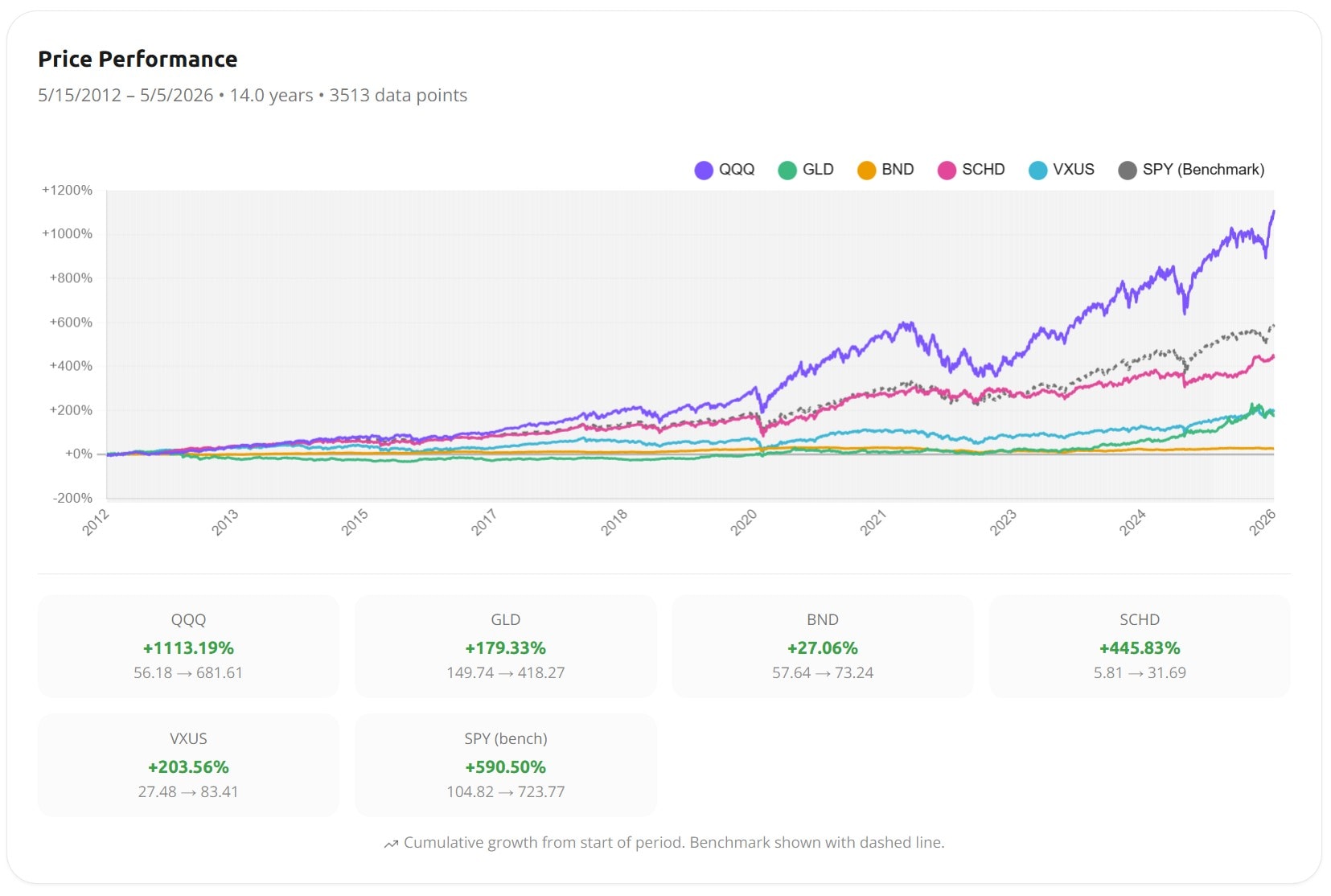
A Ticker's Past Return Is the Easiest Number to Find. And the Least Useful.
Every stock and ETF page leads with the same number: the return. Up 142% over five years. It gets screenshotted, quoted in headlines, and used to justify the buy. It also tells you almost nothing about what owning that asset actually puts you through.
The number that decides whether you keep an asset isn't what it returned. It's whether you could have held it through the worst stretch.
An asset that returned 142% but fell 60% along the way is a completely different proposition from one that returned 100% with a 25% maximum drop. Same direction, very different experience. Volatility, drawdown depth, and how an asset moves relative to everything else you own are the numbers that decide whether you stay invested or sell at the bottom. Asset Analysis puts them in front of you.
What You See with Awalyt Asset Analysis
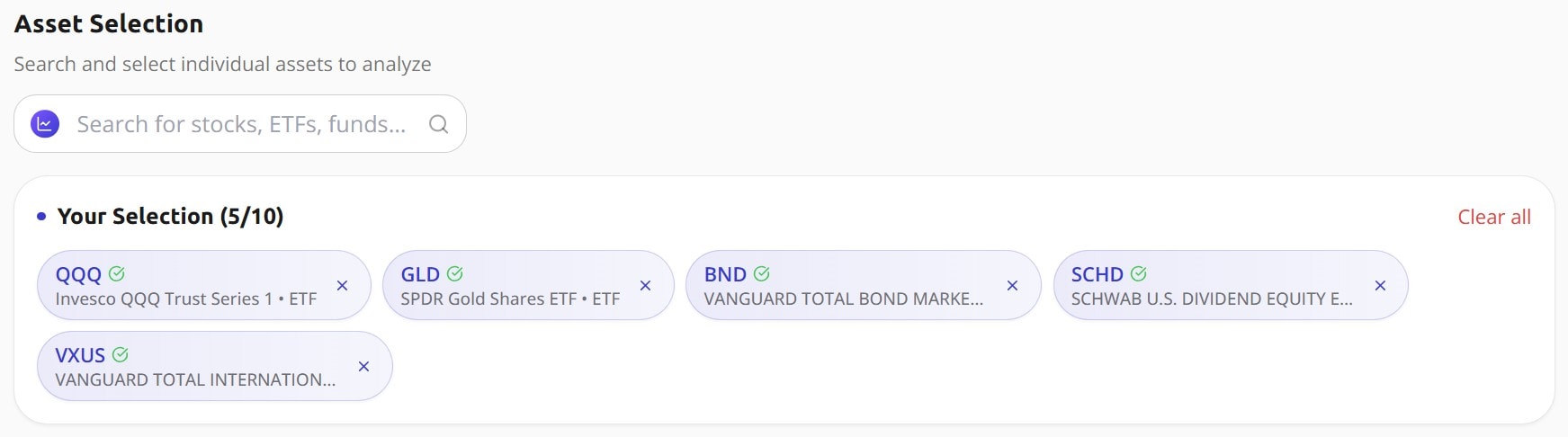
Search any stock, ETF, or fund
Type a ticker or a name. Asset Analysis pulls any publicly traded stock, ETF, or fund and puts it on the same analytical footing. Compare up to 10 at once: a candidate against the ETF you would buy instead of it, or a new holding against what your portfolio already owns.
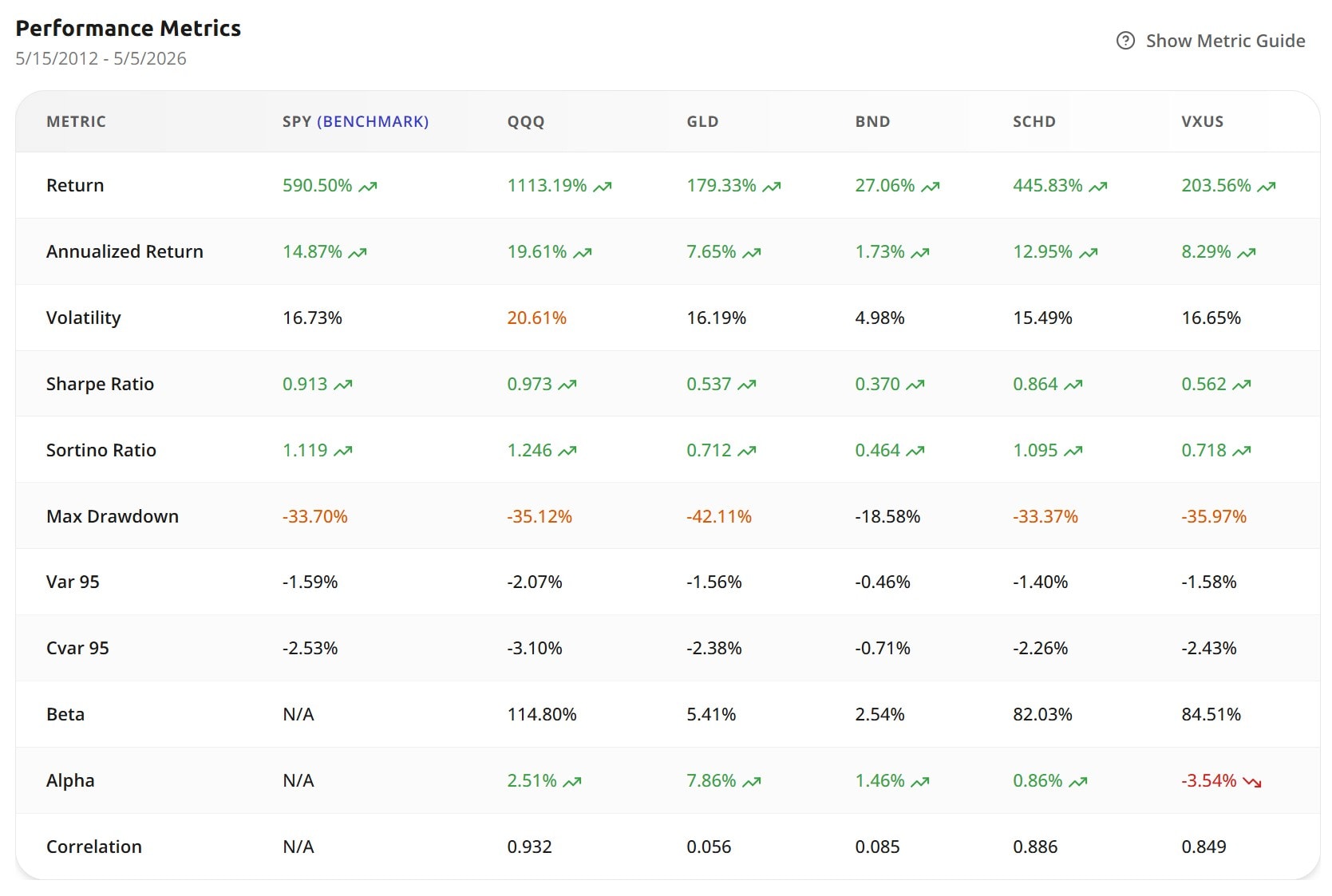
The full risk picture, not just the return
Return is one row. Below it sits everything that return leaves out: annualized return, volatility, Sharpe and Sortino ratios, maximum drawdown, Value at Risk and Conditional VaR, beta and alpha against a benchmark. The numbers that show not just how much an asset gained, but how rough the ride was and how much risk it took to get there.
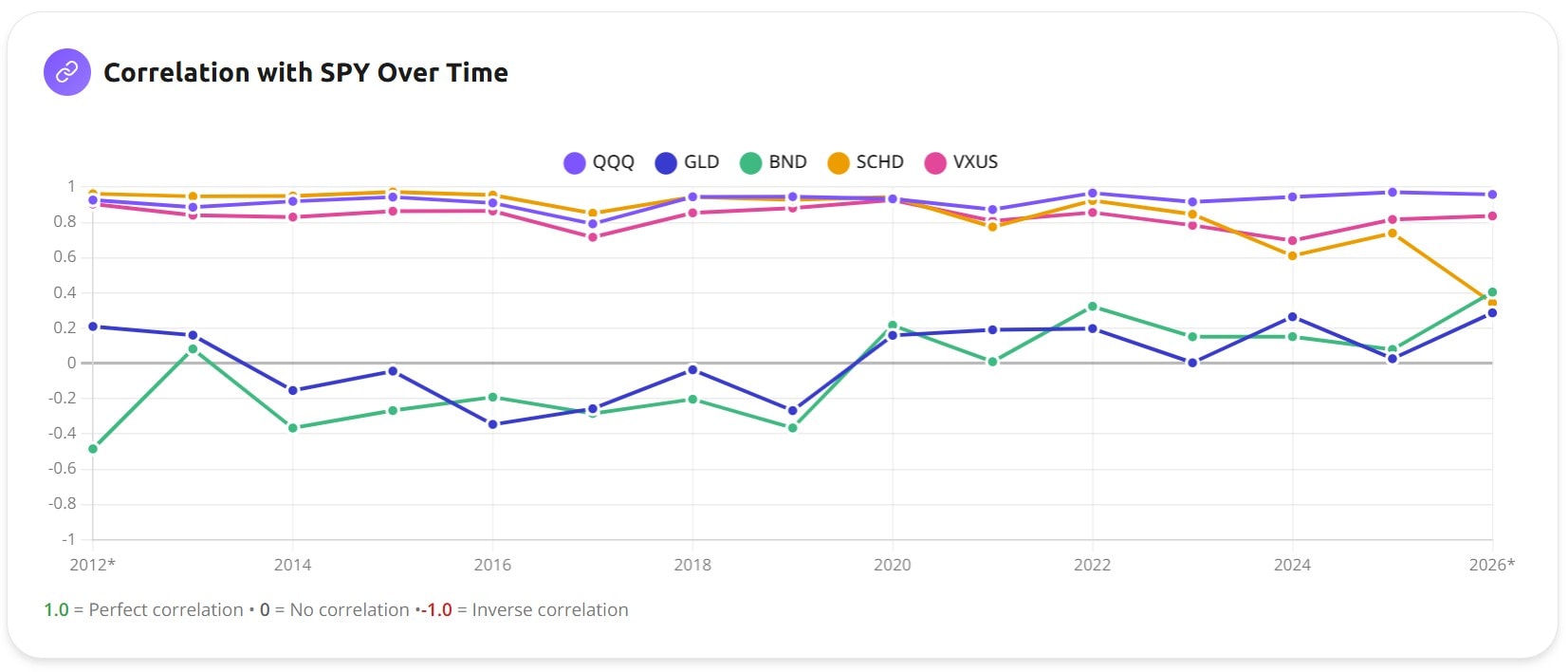
Correlation that shifts, shown year by year
Most tools give you one correlation number averaged across the entire history. That average hides the thing you most need to know: correlations move. BND was negatively correlated with the S&P 500 for most of the post-2008 era, then turned positive in 2022, the year bonds were supposed to cushion the fall and instead fell with stocks. Asset Analysis plots the year-by-year evolution, so a regime change shows up as a line bending, not as a number you cannot see inside.
From Ticker to Risk Profile in 3 Steps
Select Your Assets
Search and add any stock, ETF, or fund. Add up to 10 to analyze side by side, measured against a benchmark like SPY.
Set the Time Window
Pick the period. Asset Analysis uses daily data going back as far as each asset's history allows, so every metric reflects real trading days, not monthly snapshots.
Read the Numbers
See the full output: cumulative performance, the complete risk-metrics table, and correlation over time. Everything you need to tell whether an asset fits how you actually invest.
Why Investors Use Awalyt for Asset Analysis
| What Matters | Other Tools | Awalyt |
|---|---|---|
| Data granularity | Monthly returns | Daily data (252 pts/year) |
| Risk metrics shown | Return, sometimes volatility | Volatility, Sharpe, Sortino, drawdown, VaR, beta, alpha |
| Correlation analysis | One static number | Year-by-year evolution vs benchmark |
| Drawdown accuracy | Understated by monthly smoothing | True daily drawdowns |
| Multi-asset comparison | One asset at a time | Up to 10 assets side by side |
| Beyond asset analysis | Separate subscriptions for backtesting, fundamentals | Backtesting, fundamentals, monitoring — all included |
| Price | $200–$500/year | Free, or $179/year all-in |
252
Daily data points per year
10+ Years
Of price history per asset
$0
Free to start
“Awalyt's risk metrics are computed from daily price data, not monthly approximations. Volatility, drawdown, and correlation reflect what actually happened on real trading days — so the risk you see is the risk that was really there.”
Frequently Asked Questions
Yes — Awalyt has a Free plan, free forever, no credit card. Premium is $179/year with everything included.
Asset Analysis studies individual instruments: how a single stock, ETF, or fund behaves on its own. The backtesting tool tests a full portfolio, with multiple assets, set allocations, and rebalancing rules, simulated over time. Different jobs, same daily data underneath.
Asset Analysis looks at price behavior: volatility, drawdown, correlation, the market numbers. Fundamental Analysis looks at the company behind a stock: revenue, margins, and valuation from SEC filings. One asks how an asset moves; the other asks whether the business is healthy.
Asset Analysis uses daily price data going back as far as each asset's trading history allows. For most established stocks and ETFs, that means 10 or more years.
Any publicly traded stock, ETF, or fund. You can also compare different asset types side by side, for example a single stock against a broad-market ETF.
SPY, the S&P 500, is the default benchmark for beta, alpha, and correlation. It represents the broad US equity market that most portfolios are measured against.
Stop guessing at risk. Start measuring it.
Create a free account and analyze your first asset today.
Get Started Free